SMALL BUSINESS PROFILE MID CENTURY MOBLER
September 10, 2026
September 10, 2026
Whether it's architecture, furniture, or even apparel, mid century modern is the epitome of excellent design. We love everything from the era, and it was a thrill to have a conversation with Julian Goldklang, founder and owner of Berkeley's Mid Century Mobler.
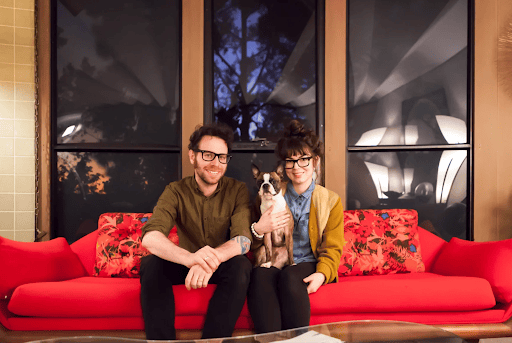
Julian and his partner Desiree have gone to great lengths - and many different countries - to build an incomparable resource for midcentury furniture. Wherever you are in the Bay Area, this store is absolutely worth the trip. Here's what Julian told us about the store's origins and what you can expect to find and delight you.
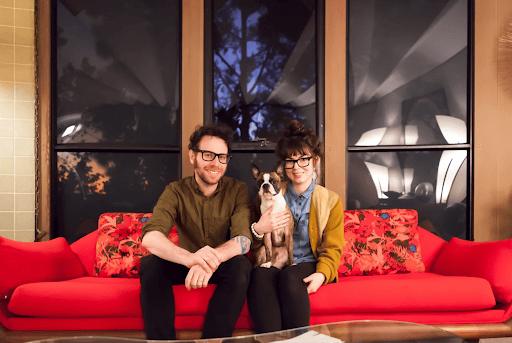
What opportunity did you see that inspired you to create Mid Century Mobler?
The business actually started as a hobby that got out of hand. Back in 2005 I was working as a producer for a TV channel, but on the side I was estate saleing and selling pieces on eBay, just because I loved the hunt. My own collection kept growing until I had to rent a garage to store it all. At some point I realized the thing I was doing for fun on weekends was the thing that actually excited me, more than my day job did, so I leaned into it. Finding it and selling it stopped being a side project and became the plan.
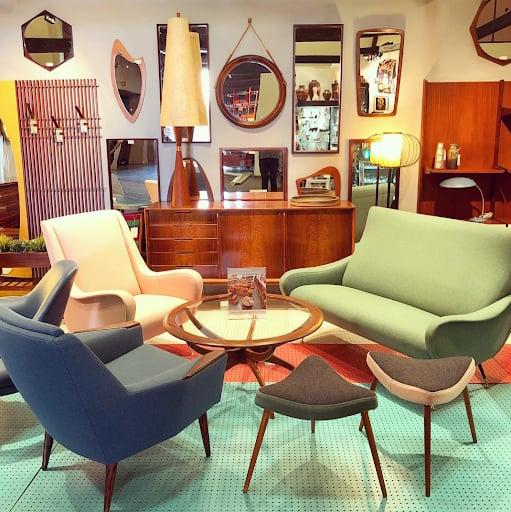
What does your sourcing process look like, and what qualities make a piece worth bringing back?
We do regular buying trips to Denmark, Sweden, Norway, Germany, England, Scotland, France, and Italy. It's a lot of estate visits, old dealer relationships, and knowing which regions and workshops to trust. We focus on 1945 to 1975. What makes something worth the shipping container is simple: is it genuinely of the era, unique, well made, and is something people will actually use for another 50+ years.
How do you decide which modern/contemporary brands make the cut?
We carry brands like Carl Hansen, Fritz Hansen, Fredericia, GUBI, Louis Poulsen, Cherner, and Verpan, but these aren't "inspired by" mid-century design, they're the same houses (or same designs) continuing the work. That distinction matters to us. We're not looking for companies chasing a trend; we're looking for the ones still producing an original design to its original standard, or descendants of the workshops that made the pieces we source vintage. It helps us fill in the gaps when a client wants 45 wishbone chairs for a commercial space, and we can source them directly from Carl Hansen + Søn, where finding them vintage would be a monumental task.
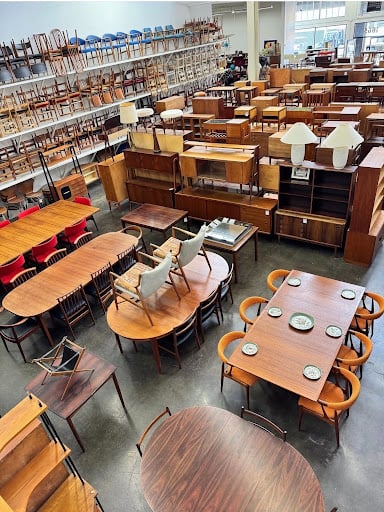
What is it about mid-century design that mass-market brands can't replicate?
Mostly it comes down to what you can't fake: the joinery instead of veneer over particleboard, upholstery built to be re-covered instead of thrown away, proportions that were drawn by someone solving a specific problem rather than optimized for flat-pack shipping. A lot of mass-market "mid-century style" copies the silhouette and skips everything (the quality) that made the originals last 70 years.
Advice for incorporating mid-century furniture into an existing design scheme?
Start with one piece, not a whole room. A single credenza, chair, or pendant light will tell you fast whether the warmth of the wood and the cleaner lines work with what you already have. Mid-century mixes well with almost anything because the pieces were designed to be functional first, not matchy. Don't feel like you need to commit to a whole "look."
If someone visited the showroom this weekend, what are one or two pieces they'd fall in love with?
Right now I'd point people toward two pieces. The first is a Hans Olsen TV 161 modular sofa in teak and cane. It's unique because it was actually designed in the late 1950s for watching TV, you could pull the seat section out and scoot it closer to the screen. Nobody designs furniture around a specific ritual like that anymore. The second is a Johannes Andersen bow front tambour corner unit in teak, a curved corner bar with tambour doors and a lit interior. It's the kind of piece that makes people stop mid-sentence. Who doesn't love a lit bar with a bow front with doors that mysteriously disappear?
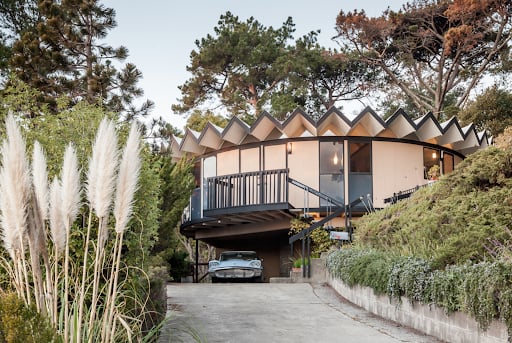
Tell us about your home search and how you landed the round house in the Oakland Hills.
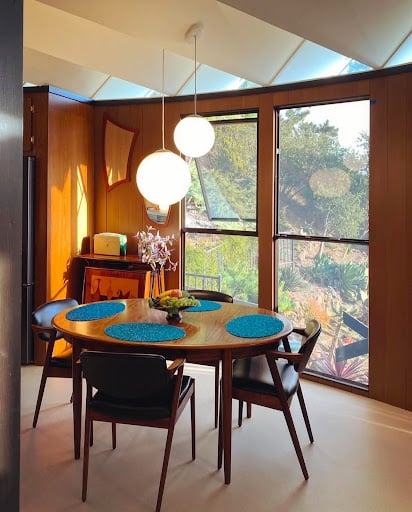
We moved the store from San Francisco to Berkeley in 2015, and around the same time we were hunting for a mid-century house of our own in the East Bay. Our requirements were narrow and, it turns out, hard to satisfy at the same time: as original as possible, meaning original fixtures and finishes, not walls and paneling that had been painted over or stripped out, but also actually maintained. Most houses from that era give you one or the other. Either they're fully original and falling apart, or someone "flipped" them and ruined everything that made them worth having. We saw the listing for our Leon Meyer house the day it hit the MLS, and not long after that it started showing up in articles everywhere, so we knew we weren't the only ones who recognized it. It had three previous owners, with the kitchen and bathrooms modified a bit over the years, but the bones were completely intact. Every owner before us understood what they had and respected it. We've just recently finished bringing it back to how it should have, and could have, looked in the late 1960s.
What has it meant to build Mid Century Mobler as part of the Berkeley community?
Berkeley is one of the only places where enough people already understand why a well-made 1962 credenza is worth more than a new one. The architectural literacy here is real. Being part of a community that already values craftsmanship and independent businesses means we're not spending our energy convincing people vintage is worth it. We get to just do the work.
1065 Ashby Ave, Berkeley, CA
415-497-6626
https://www.instagram.com/midcenturymobler/
Stay up to date on the latest real estate trends.

September 23, 2026
In the last two weeks, 7 homes sold in San Francisco's Noe Valley neighborhood. The closed listings range in price from $1,200,000 to $9,100,000. The listings have a m… Read more

September 23, 2026
In the last two weeks, there have been 5 home sales in San Francisco's Bernal Heights neighborhood. Closed listings range in price from $600,000 to $2,920,000. The clo… Read more

September 23, 2026
In the last two weeks, there have been 16 home sales in the Sunset District. Closed listings range in price from $1,410,000 to $3,505,000. The closed listings had a me… Read more
September 17, 2026
In the last two weeks, there have been 7 home sales in San Francisco's Portola and Excelsior neighborhood. The closed listings range in price from $1,100,000 to $2,398… Read more
September 17, 2026
In the last two weeks, there have been 13 home sales in San Francisco's Westside neighborhoods. The closed listings range in price from $745,000 to $3,850,000. The clo… Read more
September 10, 2026
In the last two weeks, 10 homes sold in San Francisco's Noe Valley neighborhood. The closed listings range in price from $846,000 to $6,400,000. The listings have a me… Read more
September 10, 2026
In the last two weeks, there have been 4 home sales in San Francisco's Bernal Heights neighborhood. Closed listings range in price from $1,525,000 to $3,000,000. The c… Read more
September 10, 2026
In the last two weeks, there have been 16 home sales in the Sunset District. Closed listings range in price from $1,478,000 to $2,900,000. The closed listings had a me… Read more

September 10, 2026
If your condo building has 10 units or more, read on. Whether or not you're planning a sale, this could have implications for you.
You’ve got questions and we can’t wait to answer them.